
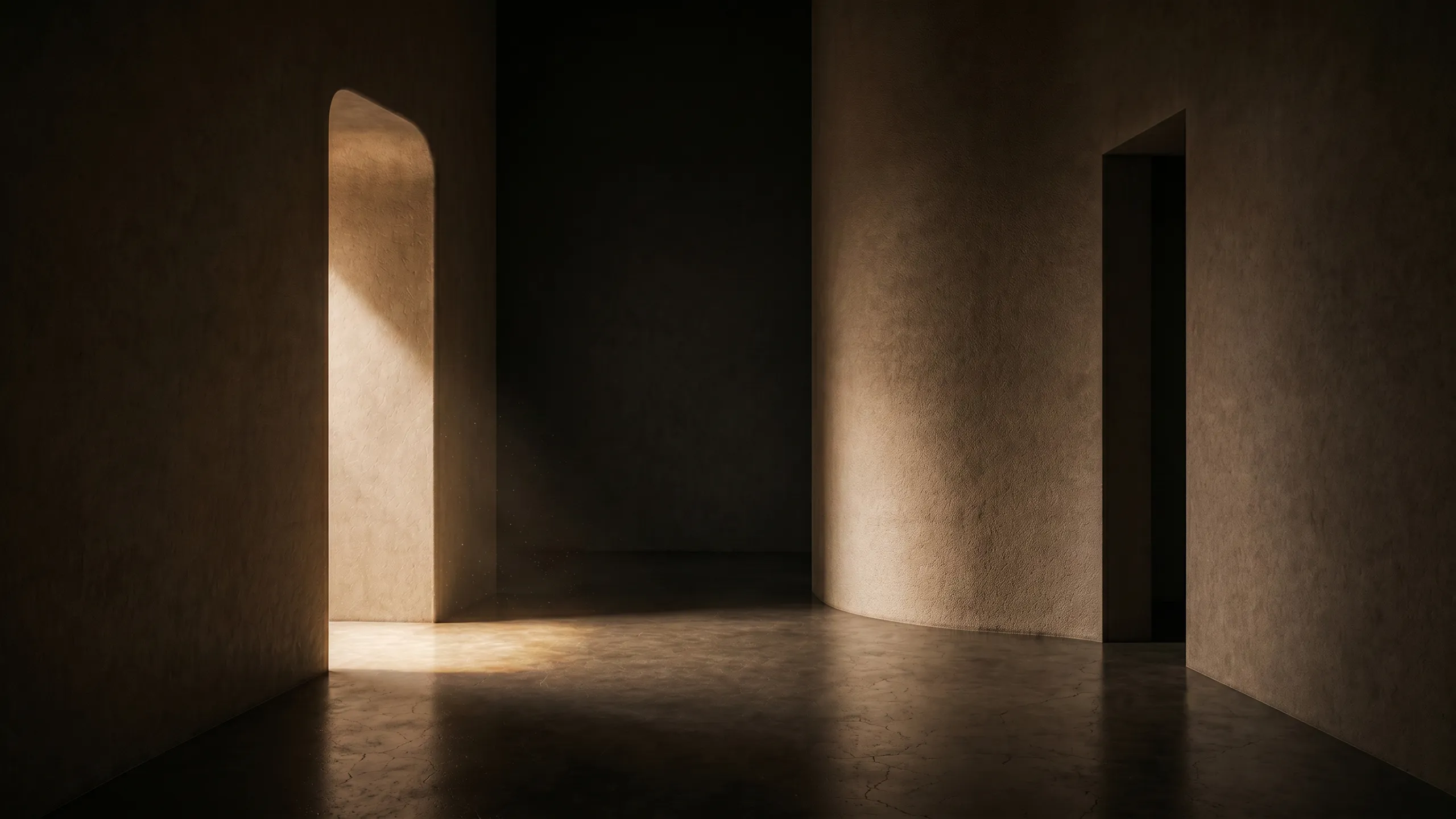
Some spaces are felt before they are understood.
Sometimes we enter a space before we have had time to identify the materials, analyze the form, register the ceiling height, or name the design style. Yet something begins to take shape in that first instant.
Calm.
Weight.
Warmth.
Distance.
Intimacy.
Dignity.
Or even lifelessness.
This initial sensation is what we might call the atmosphere of a space.
Atmosphere is not something added at the end of the design process. It is the hidden outcome of a series of decisions—decisions about light, scale, material, distance, silence, movement through the space, and the balance between fullness and emptiness.
Sometimes a space has a strong form but no atmosphere. It draws attention at first glance and may even photograph well. Yet after a few minutes, nothing remains. The form has been seen, but no experience has been created.
Form without atmosphere is only shape.
In architecture and interior design, form can be a seductive starting point. A strong line, a distinctive volume, or a dramatic gesture can capture the eye immediately. But unless it is grounded in a mood or inner quality, the space becomes more image than experience.
Space is made to be inhabited, not merely seen.
Atmosphere is built from small things: light that does not strike directly but brings a surface to life; material chosen not only for its beauty, but because it is right for the space; silence that allows a space to breathe; the distance maintained between elements; and the decision to leave empty what could have been filled.
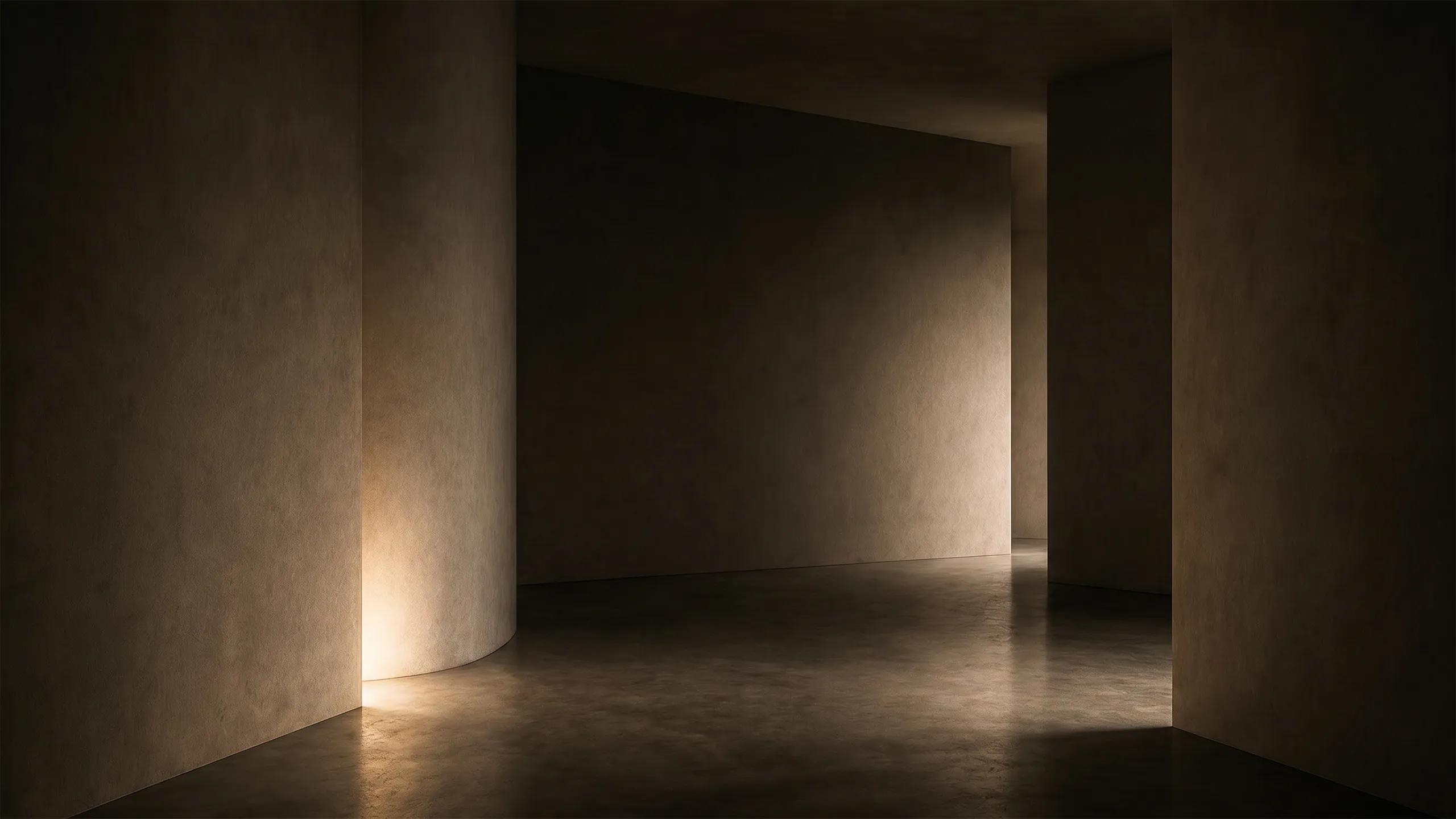
Sometimes what is removed matters as much as what is added.
This is not limited to simple or minimal spaces. Even a space rich in detail, distinctive materials, or striking forms will remain superficial if it lacks atmosphere. It may hold the eye, but it does not engage us as occupants.
An image can hold the eye for a moment, but the experience of space is completed by the body and mind. That experience depends on proportion, rhythm, silence, movement, pause, and a balance that is not always visible at first glance.
Atmosphere emerges from this balance: from no element imposing itself beyond what is necessary. Light should not become mere spectacle. Materials should not exist only to attract attention. Form should not be shaped solely for the sake of difference. Rather than reading as separate gestures, details should serve the overall experience of the space.
Some spaces are designed for photographs. They are powerful as images but weak as lived environments. Everything is arranged for the first impression, while too little thought is given to staying, sitting, moving, touching, and living.
Such design may be noticed quickly, but it is forgotten just as quickly.
Atmosphere works differently. It does not always announce itself at first. Sometimes it enters quietly: felt before it is understood, with its source becoming clear only gradually. Perhaps it comes from the light. Perhaps from proportion. Perhaps from material. Perhaps from silence. Perhaps from something that went unnoticed at first glance.
A good space does not need to explain everything.
It should allow experience to take shape.
Atmosphere is the hidden harmony among things that are seen separately but affect us together. Light alone is not enough. Material alone is not enough. Form alone is not enough. Even silence, when it is not in the right place, can feel empty and lifeless.
A space becomes more complete when these elements work together, without any one of them demanding all the attention.
In such a space, form still matters, but it is no longer the starting point. It becomes the result of something deeper: a feeling present in the project from the beginning, even before its precise shape had been defined.
Atmosphere is what keeps a space in memory.
The details of a space may be forgotten: the type of stone, the model of the furniture, even the exact shape of the walls. But when a space has authenticity, its feeling remains. Someone may have entered it only once and still remember it years later, not because of the details they saw, but because of what they experienced.
A lasting space remains in the mind not merely because its form is beautiful.
It remains because of the atmosphere it created.
Because of the silence it held.
Because of the light that revealed something.
Because of a balance that may not have been seen, but was felt.
Atmosphere begins before form, yet continues in the mind long after the space has been left.