
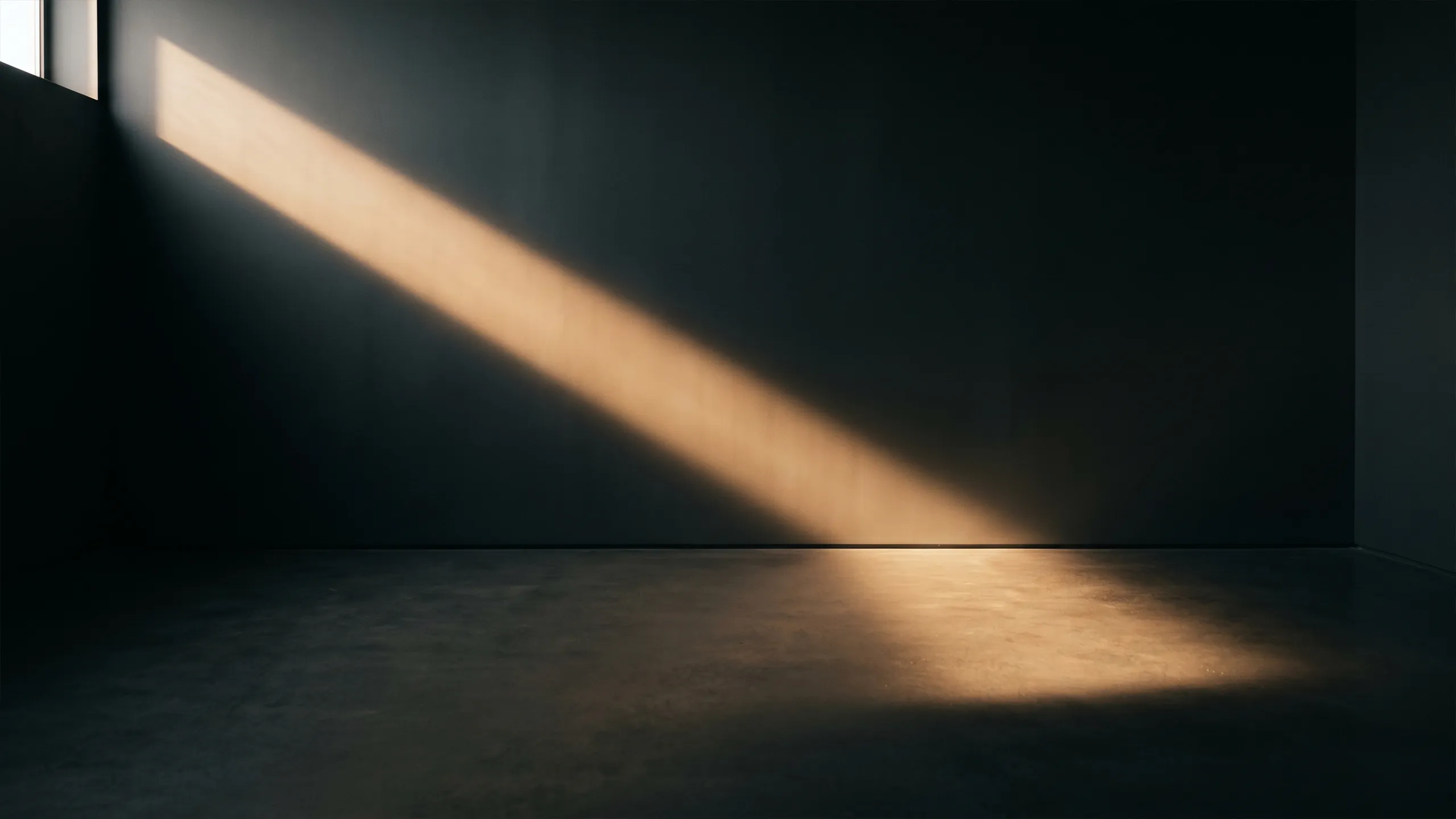
If light does nothing more than illuminate, it is not enough.
Some spaces are fully lit, yet nothing happens within them. Everything is visible: the surfaces are legible, the forms can be read, the colors are clear, but the space remains without depth.
By contrast, a line of light on a wall, a quiet shadow on stone, or a small reflection on a dark surface can sometimes bring a space to life more powerfully than full illumination ever could.
Light becomes meaningful when it reveals something.
Not only objects.
But depth.
Texture.
Time.
And sometimes what is lost in full brightness.
Good light does not always mean more light. Sometimes the quality of a space begins precisely where light does not reveal everything at once. It illuminates one part, leaves another in silence, and creates a balance between what is revealed and what remains hidden.
Shadow is not the opposite of light.
Shadow is light’s second language.
Without shadow, light becomes flat. Without darkness, brightness loses its force. A surface is truly seen when one part is revealed and another remains quieter.
Natural light is never still.
When it passes through a curtain, a window, a lattice, or a narrow opening, it does more than illuminate a space; it carries time across the surface. The shadow resting on a wall in the morning is not the same shadow we see in the evening. This subtle change keeps the space from ever becoming static.
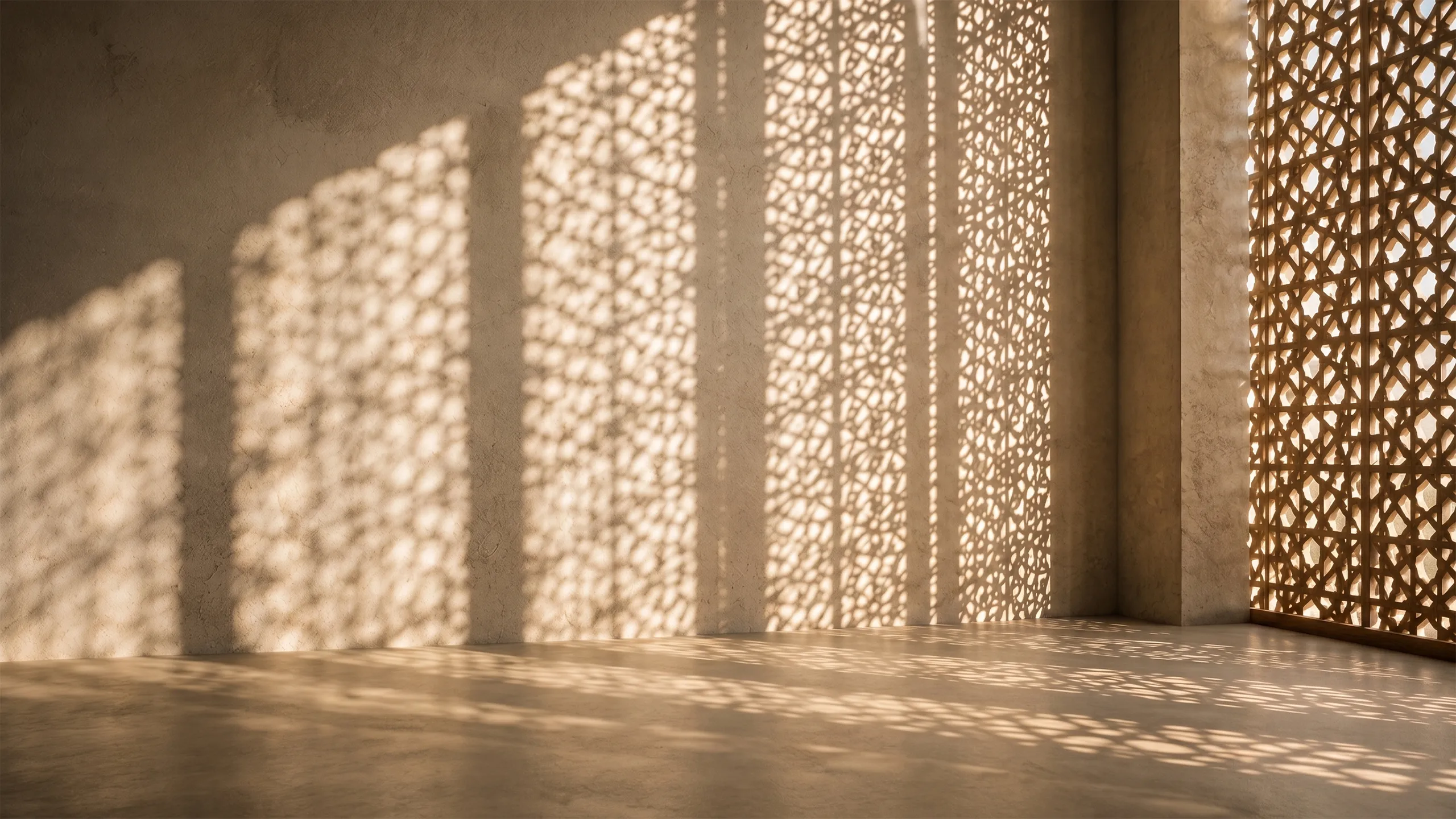
Sometimes light is reflected back from a surface, such as glass, metal, water, polished stone, or even a small detail within the space. With movement, vibration, or a shift in angle, light ceases to be static and begins to travel across a wall, ceiling, or floor.
Sometimes this slight movement is more memorable than an elaborate lighting design.
Perhaps this is why, for me, light has always gained meaning through its relationship with what remains hidden. If everything is seen, nothing is left to discover. If everything remains hidden, no connection can take shape.
The right point lies somewhere between the two, where a space or image reveals enough of itself while still retaining something that must be felt.
Material is never fully seen without light.
Stone, wood, metal, and fabric, whether matte or glossy, do not reveals their full character on their own. Light determines whether a material feels silent or alive, cold or warm, heavy or soft.
Even dark colors remain closed and muted without the right light.
But when light falls across them with precision, they gain depth.
In painting, too, light does more than illuminate the image.
It directs the eye: where to rest, where to move, what to see clearly, and what only to sense.
Sometimes light in a painting becomes the focal point.
At other times, it is like a memory slowly emerging from darkness.
In painting, as in space, light can create a balance between being seen and remaining hidden. It can guide the gaze, create depth, and keep the image from revealing everything at once.
Used with intention, light can transform the character of a space.
Sometimes less light gives a space greater depth. Sometimes a well-placed shadow carries more force than several decorative elements. And sometimes a space or image becomes more complete not because it is brighter, but because something within it has been revealed.
Something that was there all along.
But had not yet been seen.