
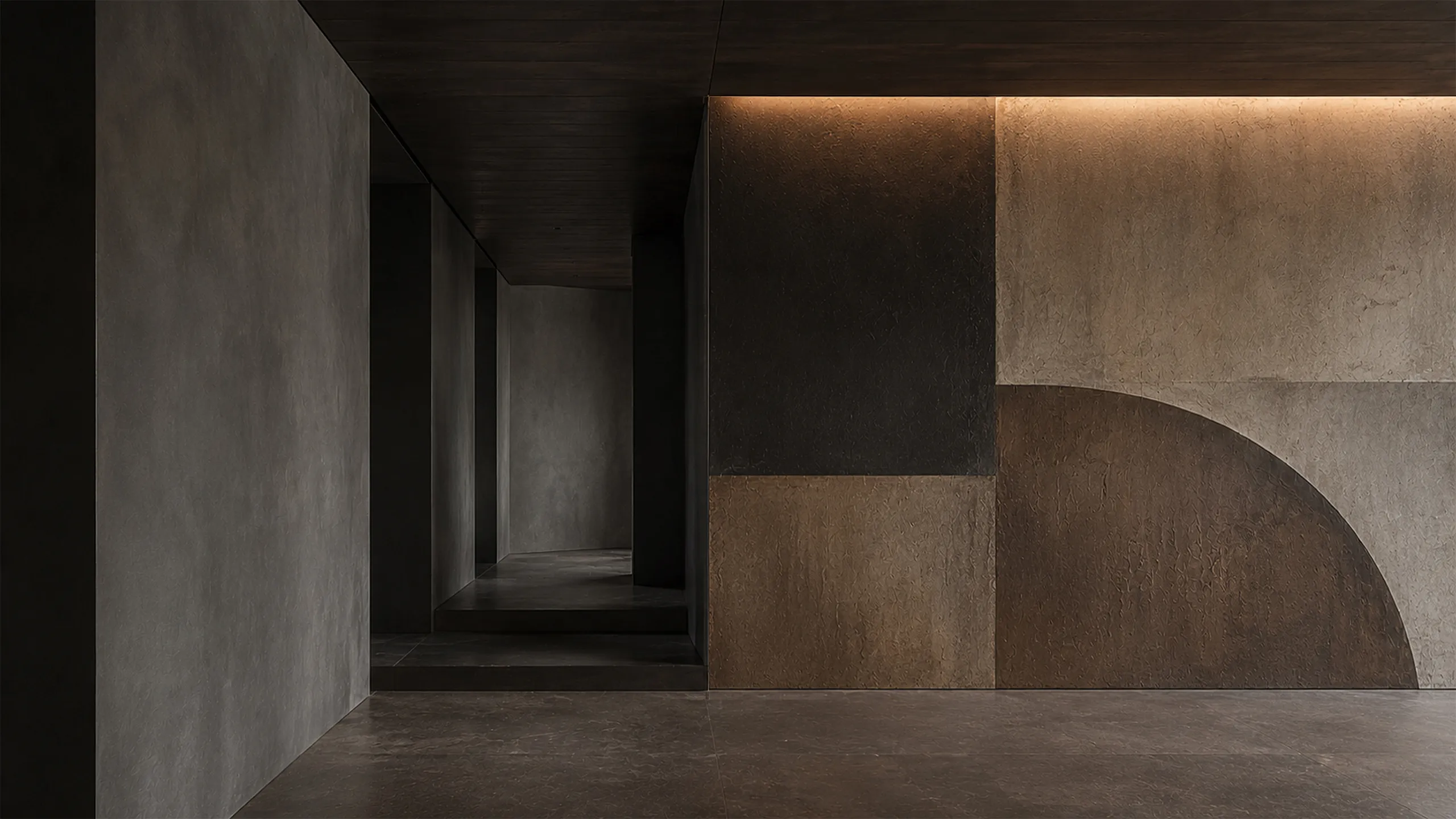
Painting is not only the making of an image.
Sometimes painting, before it is about a subject, is about seeing: about how the eye encounters a surface, where it pauses, what it follows, what it leaves aside, and how, through details, it begins to sense a whole.
On canvas, everything happens within a limited surface. Yet that limited surface can create depth, establish distance, move the gaze, and shape a world with its own laws.
In painting, every decision takes place within a frame.
Nothing is entirely separate from anything else. Each part affects another. An image takes shape when a hidden relationship begins to exist between its elements: a relationship that may not be visible at first glance, but is felt in the whole.
This way of seeing does not remain only in painting.
When a painterly way of seeing enters architecture, space is no longer only a collection of walls, ceilings, floors, and materials. It becomes an experience perceived by the eye and the body at once.
In painting, the eye moves within the image.
In architecture, the body enters the image.
This is the essential difference.
A painting can remain on a wall and be seen from a certain distance. Architecture cannot merely be observed. One must move through it, pause within it, come closer, step away, and experience its presence over time.
For this reason, architecture is not a simple continuation of painting. It is not the enlargement of an image. Architecture begins where the image steps outside the frame and encounters reality.
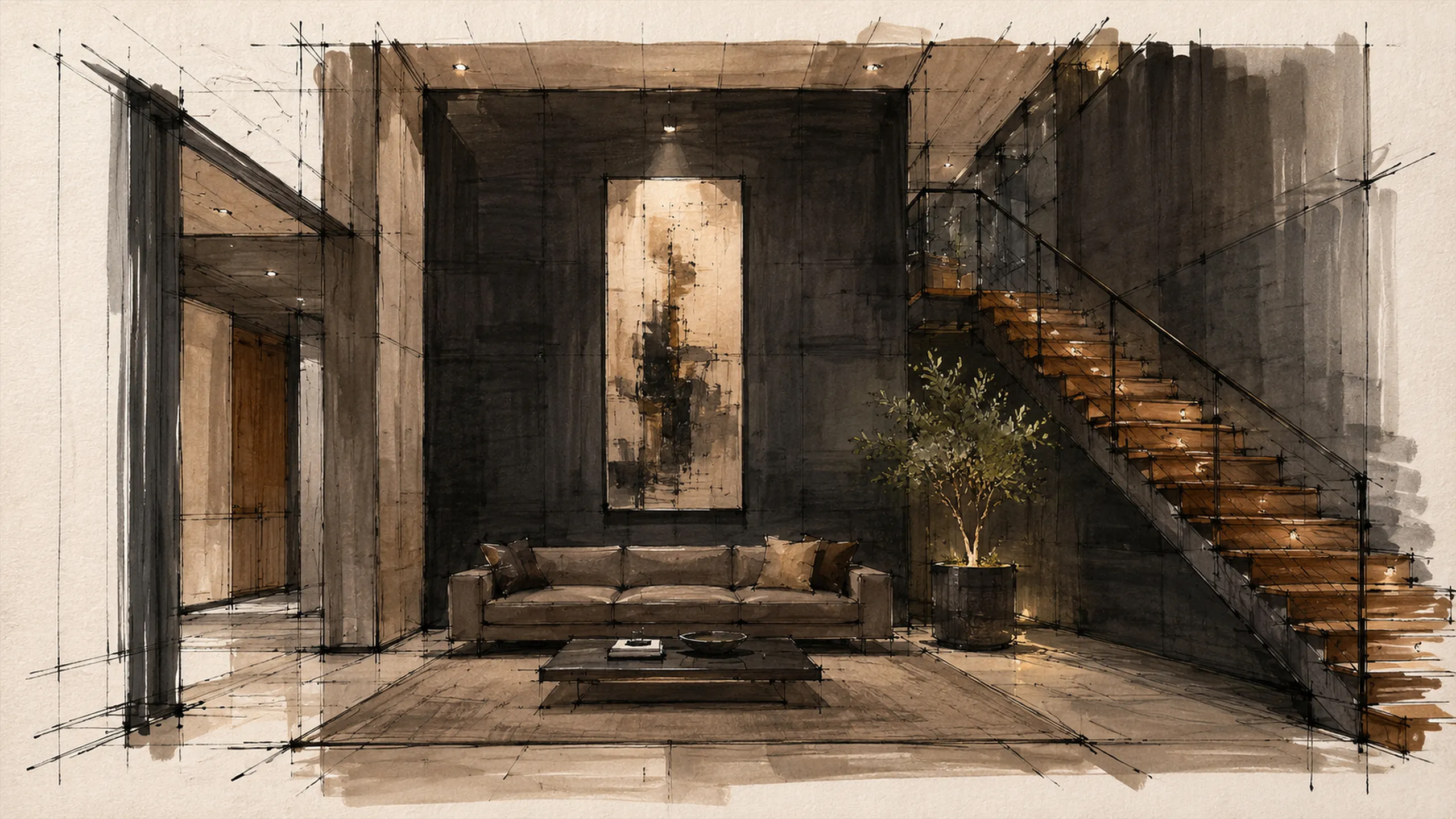
Scale. Body. Movement. Matter. Real light. Time.
On canvas, one can create a world faithful only to its own laws. But architecture leaves the frame and must enter a real world: a place where the image is no longer only seen, but experienced.
This is where architecture separates itself from image. Painting can remain entirely personal. Architecture, however, always requires the presence of another person.
Someone must enter it. Move through it. Pause somewhere within it. See something closely. Feel something without fully seeing it.
And yet, something of painting remains in architecture:
A sensitivity to composition. To proportion. To the point of attention. To the relationship between detail and whole. To what should be seen and what should remain quieter.
A good space also has a composition. Not like a painting seen from a fixed angle, but like an experience through which the body moves. The gaze begins at one point, approaches a surface, passes through a space, pauses somewhere, and finally forms a fuller image of the space in the mind. In architecture, composition is not only visual. It is spatial. It is temporal. It is experiential.
But if architecture only borrows from painting and forgets the reality of presence, it becomes an image. And an image, however beautiful, is not enough to become space. Space must go beyond beautiful composition. It must allow the human body to enter, to move, to spend time, and to carry something from it into memory. Perhaps this is where the true difference between painting and architecture becomes clear.
Painting can remain an inner world. Architecture must turn that world into a real presence.
From painting to space, the path is not only a change of scale. It is a change of condition.
What can remain on canvas as a feeling, an image, or a silence must, in architecture, become surface, matter, distance, movement, and experience. Perhaps architecture is an image that can no longer merely be seen; it must be entered, inhabited, and experienced.