
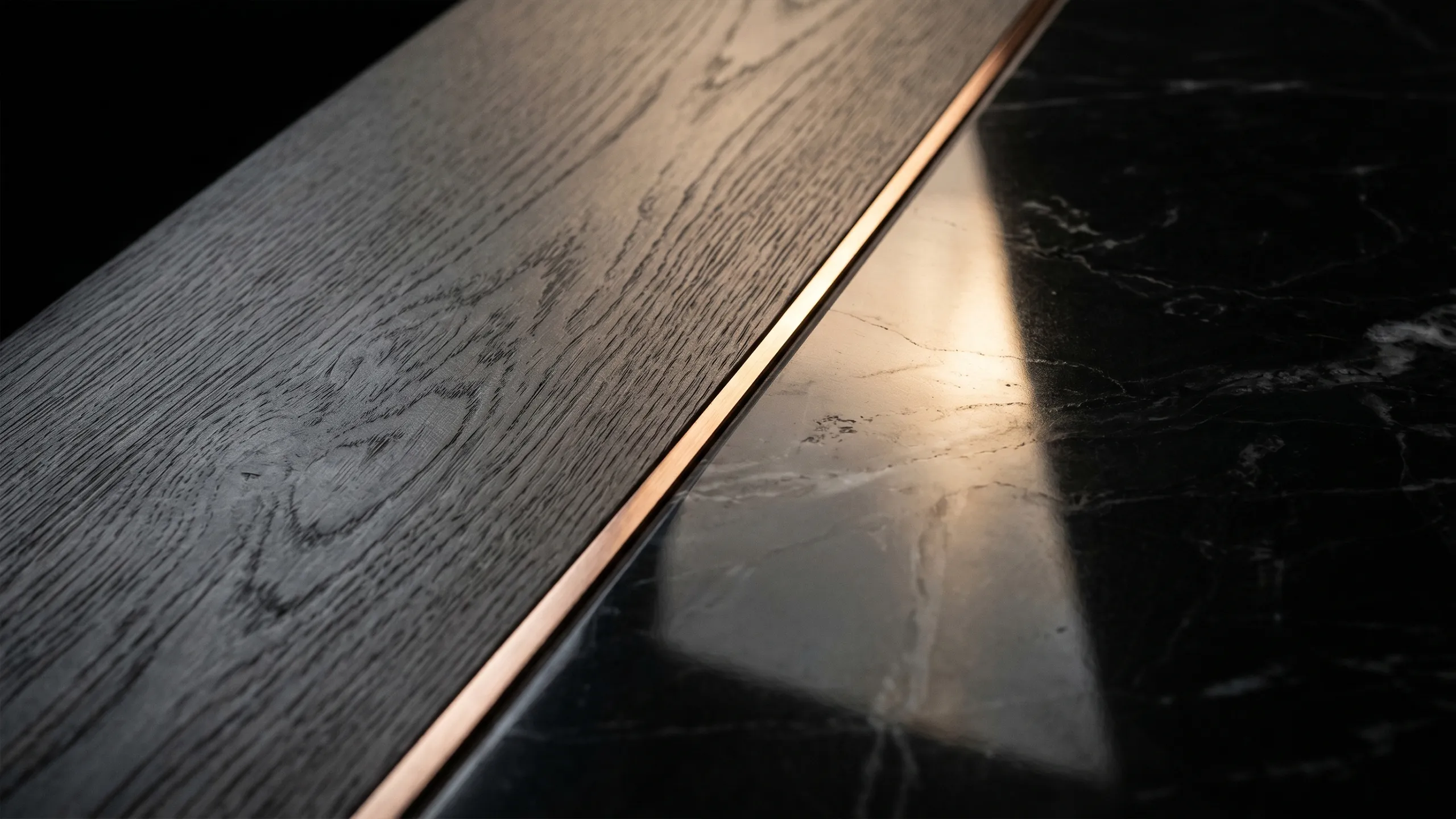
A render can be very beautiful, but it is not yet a space.
In an image, everything can appear flawless. The light is controlled, the materials are clean, the connections are hidden, mistakes do not exist, time has stopped, and no constraint disrupts the image.
But architecture and interior design do not end in an image.
A space becomes real when it is built, when dimensions, materials, details, the site, the workforce, time, budget, and construction limitations enter the process. That is where the quality of design is no longer measured only by the beauty of the image, but by its ability to become reality.
If design is separated from execution, it may look strong at first, but its weaknesses appear during construction.
A simple line in a render can become the connection between two materials in reality. A beautiful hidden light needs space, depth, access, and proper detailing on site. A seamless wall faces joints, thickness, substructure, and tolerances on site. A special material, if not installed properly, loses part of its value.
This is where the difference between an attractive image and a buildable design becomes clear.
Professional design does not only ask how the result will look. From the beginning, it asks: How will this idea be built? With which materials? With what details? Within what timeframe? By which team? And to what standard of quality?
These questions do not limit design.
On the contrary, they make it more real.
Understanding limitations is not the enemy of creativity. It is part of creativity. When a designer understands execution, decisions are made from the beginning to ensure that the design is both beautiful and buildable. The designer knows where details should become simpler, where material should change, where the image should not be trusted, and where an idea must be corrected before it reaches the site.
Many problems in projects arise from the distance between design and execution.
Where the drawings say one thing, but the site demands another. Where the details are not enough. Where a material has been selected, but how it should be installed has not been defined. Where a decision that looks beautiful in an image is not maintainable, buildable, or usable in reality.
In luxury projects, this distance becomes more dangerous.
Because in such spaces, quality is seen and felt in the details. Edges, joints, connections, thicknesses, levels, distances, surface finishes, and the points where materials meet cannot later be hidden by a beautiful image.
If a luxury space is poorly executed, even the best render and the most expensive materials cannot protect it from appearing weak.
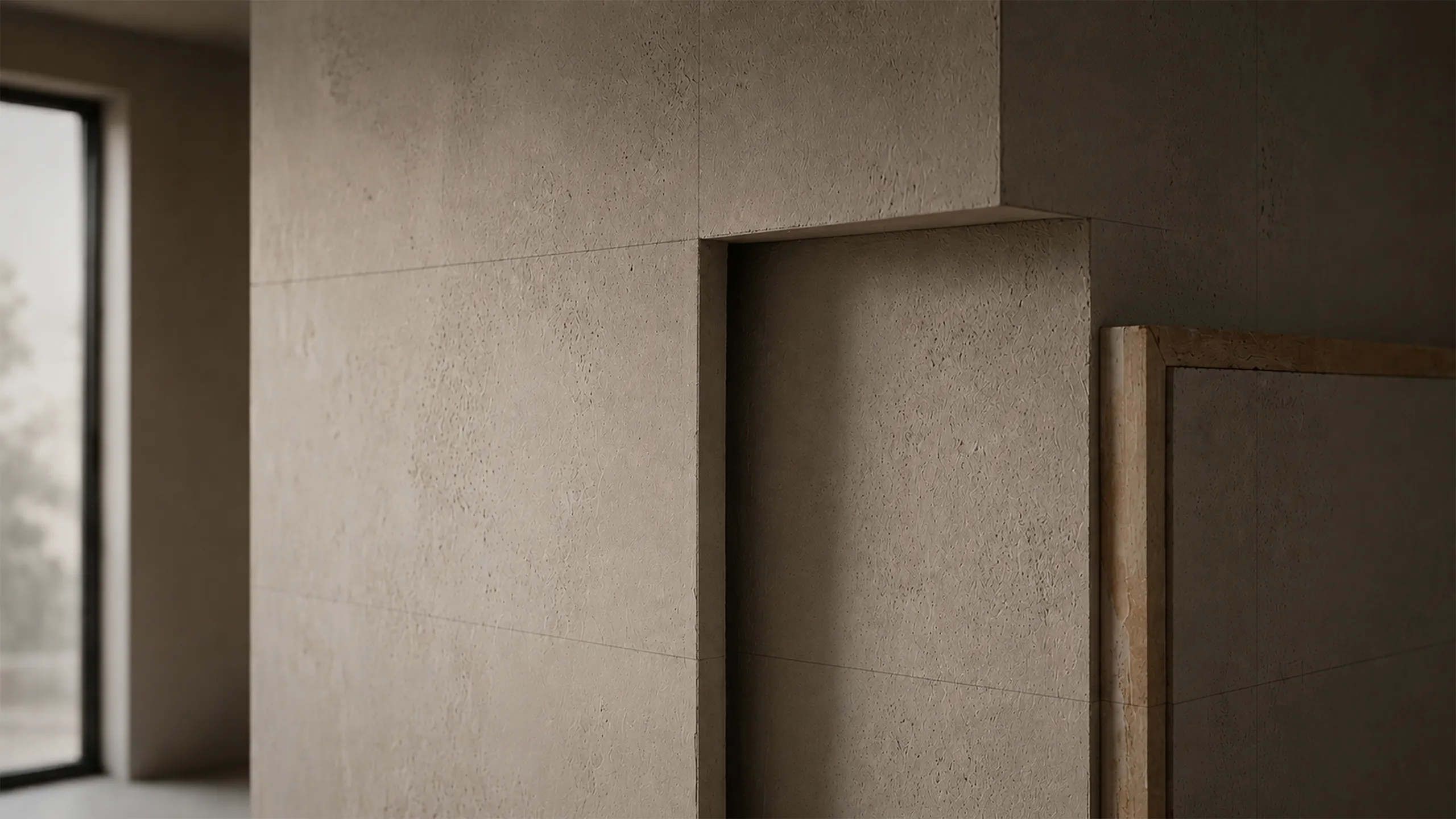
Real quality becomes visible in details the eye may pass over quickly but the body still registers: in the way a door closes, in the continuation of a line, in the cleanliness of a corner, in the distance between two surfaces, and in the harmony between design and construction.
A render can make a promise. But execution reveals how real that promise was.
This is why design should be shaped with an awareness of execution from the outset, not by creating an image first and then expecting the construction team to find a way to make it buildable. When execution is present in the designer’s mind from the beginning, the project follows a healthier path.
The design becomes more precise.
The details become clearer. The choices become more logical. And the distance between what is presented and what is built becomes smaller.
This does not mean reducing imagination.
It means turning imagination into something that can stand up to reality.
A good render can capture attention. But a good space must still be able to defend itself after it is built.
When real light enters it, it must still feel right. When material is touched, it must still have quality. When a person moves through it, it must still work. When the details are seen closely, they must still protect the credibility of the design.
Real design happens where idea, image, and execution are not separated from one another.
Where beauty does not remain only in the render. Where details do not remain only in drawings. Where the site is not merely the executor of an image, but part of the path toward quality.
From a beautiful render to a buildable space, the path is not simple.
But it is this path that reveals whether a design was only ever an image or became a built reality.