
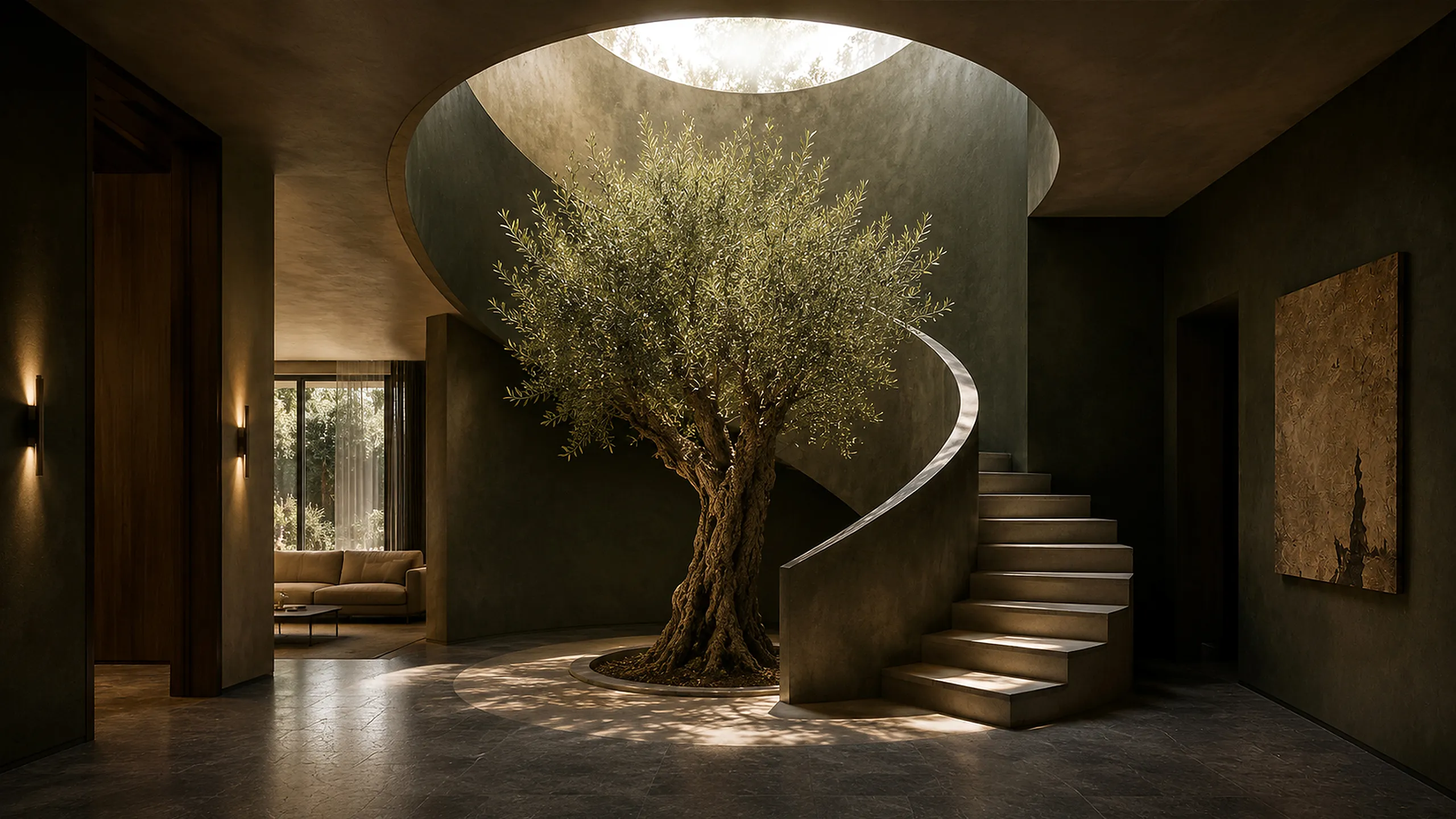
A luxury space is not designed in isolation.
No space can be understood apart from geography, climate, culture, habits of living, and the real needs of people. A design may look attractive in an image, but if it does not respond to light, heat, privacy, movement, and the rhythms of those who inhabit it, it soon begins to lose its real quality.
Luxury is not only about appearance.
Not only expensive materials. Not only special furniture. Not only a striking form. Not even an abundance of details.
A luxury space must work well in real life. It must endure everyday use without losing its dignity or quality.
Climate is one of the first things design must respond to.
The intensity of light, levels of heat and humidity, the sun’s path, and the way shade is created can all shape the character of a space. A space that feels calm and appropriate in a cold, low-light geography may feel unbalanced or exposed in a hot and bright one.
Luxury design means understanding these differences.
It means light should not enter a space only for beauty; it should be controlled, filtered, and placed in service of the real experience. It means material should not be chosen only for appearance; it must be able to live within the conditions of that space, endure them, and preserve its quality.
Privacy is also an essential part of the quality of luxury spaces.
Privacy is not created only by building walls or blocking views. Sometimes it is shaped through distance, sometimes through a shift in direction, the placement of openings, changes in level, filtered views, or even the way one enters the space.
In many luxury spaces, the quality of experience begins from these moments: how one arrives, what is seen first, what is revealed later, and which areas remain quieter and more private.
A luxury space should not reveal everything at once.
It should understand what is public and what is private. What should be seen and what should remain quieter. What belongs to the guest, and what belongs to the everyday life of those who truly use the space.
Culture and lifestyle are as important as environmental conditions.
A house, an office, a restaurant, a showroom, or a hospitality space is not made through planning and materials alone. It is also shaped by the way people live: how they sit, host, work, eat, rest, move, and connect with one another.
If design does not account for these behaviors, even the most beautiful space can become uneasy or artificial.
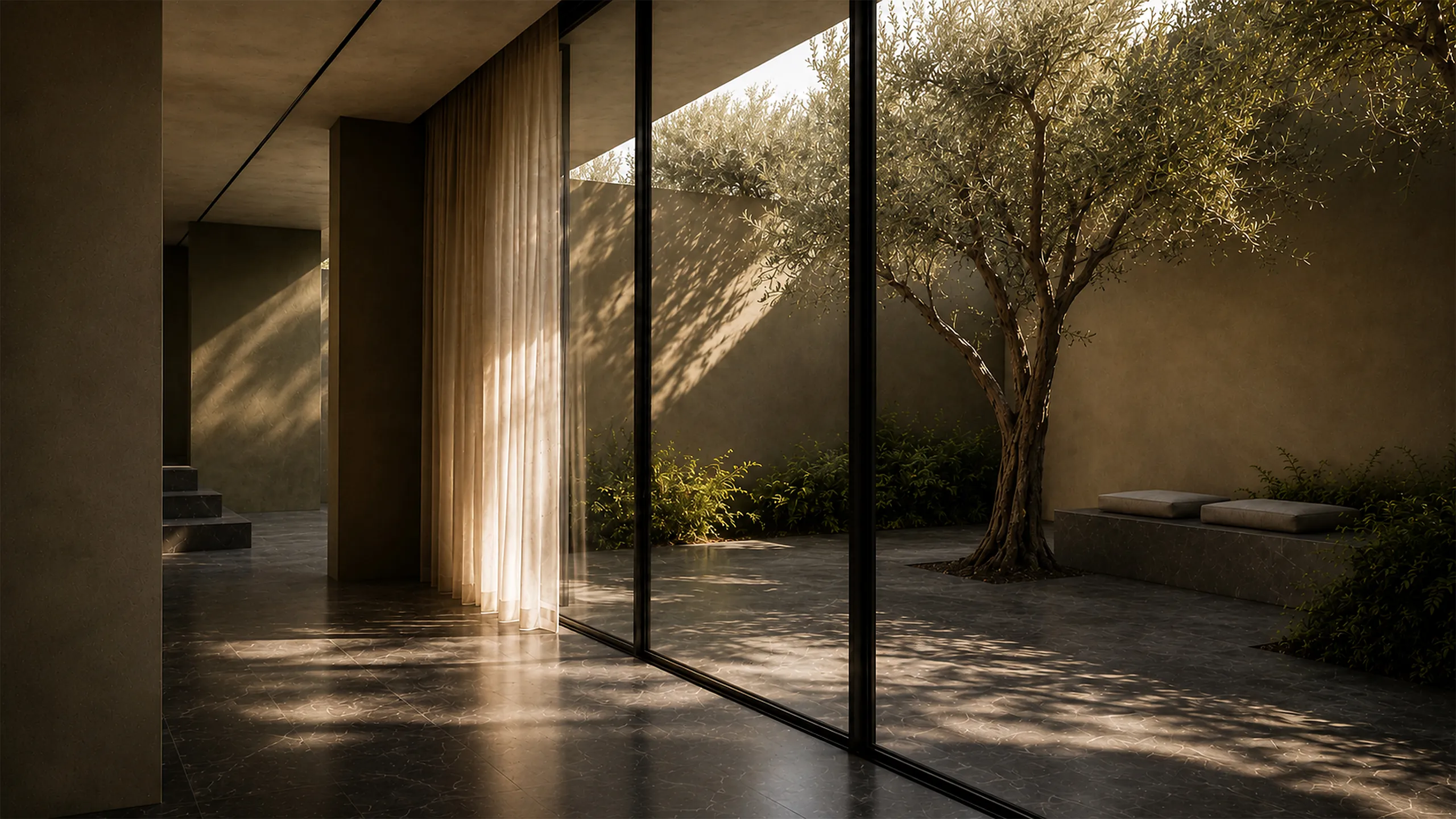
A luxury space must have an identity. It should not feel like an anonymous combination of materials, brands, and repeated images. A showroom may be filled with expensive furniture, special materials, and striking pieces, but if it is unclear what story it carries, which brand it represents, how it guides the visitor, and what kind of experience it creates, it remains only an arranged collection of expensive things, not a luxury space with identity and meaning.
It should be clear that the space belongs to a certain life, a certain culture, a certain context, and a certain way of seeing.
Sometimes the problem with a space is not that it is not beautiful.
The problem is that it does not understand real life.
In such a space, quality is built from things that may not be immediately visible: from the amount of light that has been controlled, from the distance that allows privacy, from materials that withstand time and use, and from an order that supports human presence without imposing itself.
True luxury is hidden in these details.
In the way a space still feels right after long use. In the way its quality remains present in everyday life. In the way a person feels that the space has understood them.
Designing luxury spaces is less about adding and more about recognizing.
Recognizing what is necessary. What is excessive. What should be seen. What should remain hidden. What must endure environmental conditions. And what must be aligned with real life.
A space becomes luxurious when it achieves a balance between beauty, function, privacy, climate, culture, and everyday life.
Not only in the first moment, but in daily use. In ordinary movement. In gatherings. In solitude. And in all the moments when the space is no longer for display, but for living.
Perhaps this is precisely where luxury design begins:
By understanding that space is not meant only to be seen.
It is meant to be lived.