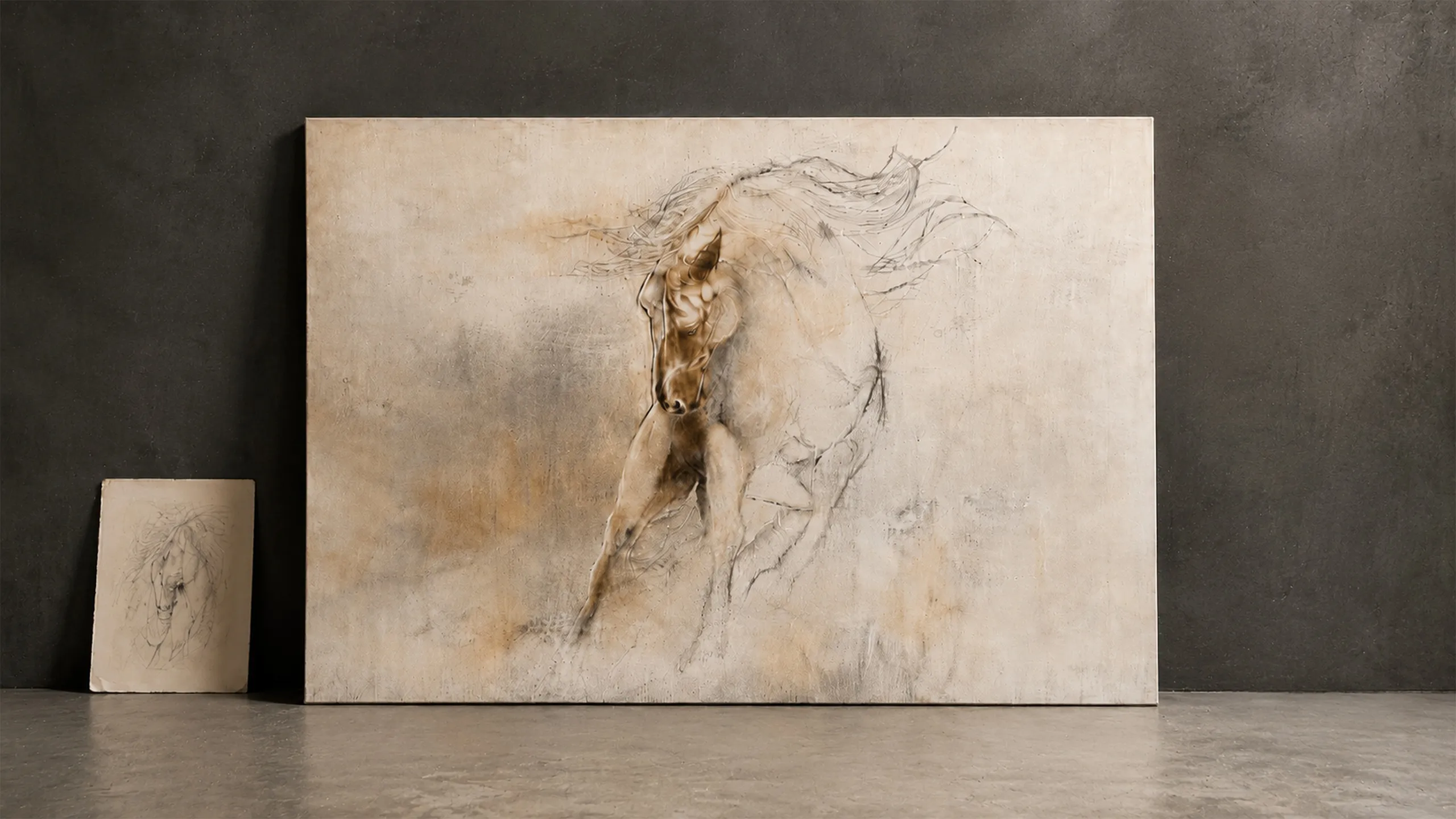
Not every artwork reaches completion along a straight and predictable path. Some paintings, sketches, or visual works come to a halt after a time, not always because of weakness, indecision, or abandonment, but because they have not yet reached a point at which they can be considered finished.
In art, unfinished does not always mean incomplete. A work may still be taking shape even after remaining untouched for a long time. The artist may step away, return later, remove something, add another layer, or discover with time that the work no longer needs to continue.
This distance is part of the creative process. An artwork is not made only while the artist is physically working on it. Time, pause, doubt, return, and a changing perspective all contribute to its formation. Sometimes something that seemed important at the outset later loses its importance. Sometimes a part that was overlooked slowly moves toward the center of the work.
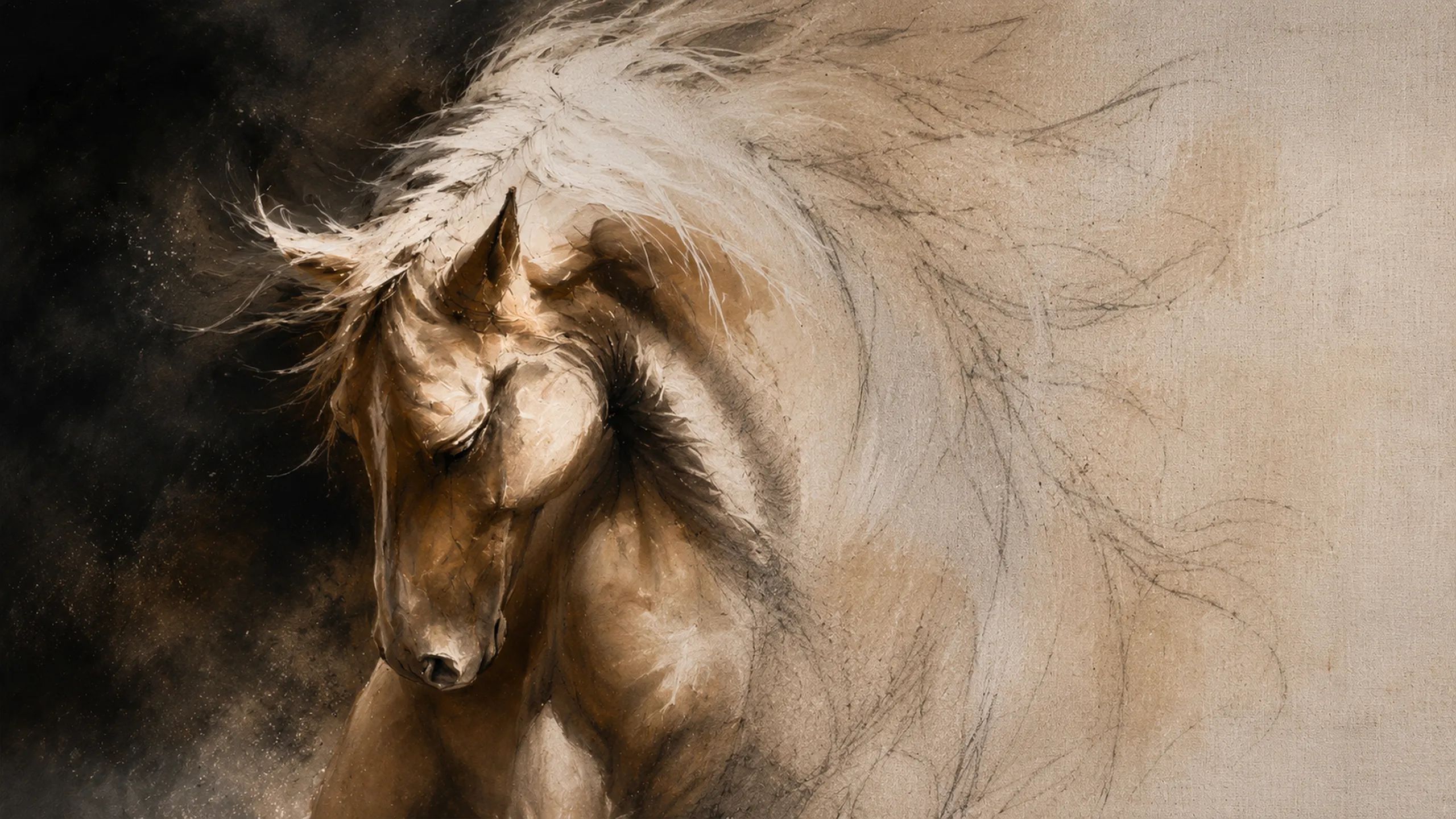
For this reason, an unfinished work can reveal something of the artist’s path that is less visible in a fully resolved and closed work. Traces of decisions. Of changes in direction. Of pauses. Of something not yet settled.
In works like these, the ending is not always a clear line. Sometimes a work is finished when it no longer asks anything of the artist. Not when every surface has been filled. Not when everything has been explained. Not when it merely appears complete. But when continuing would add nothing to the truth of the work.
This moment cannot always be planned. Sometimes time reveals that a work’s silence was part of the work itself.
At other times, a work that seemed finished begins to ask for something again: a small change, the removal of a part, or a quiet return to a place that is still alive.
The distinction between an abandoned work and an unfinished one matters. An abandoned work has lost its connection; nothing continues to flow between the artist and the work. An unfinished work, however, may still be active in the artist’s mind. It may appear silent, yet it is not closed.
Sometimes this unfinished state becomes part of the work’s language not to excuse a flaw, but to show that creation does not always lead to a fixed and final conclusion. Some works derive their value not only from the result, but from the path through which thought, hand, time, and doubt have engaged with one another.
An unfinished work can be a place where a question remains. Not a question that must necessarily be answered. Not an ambiguity that needs immediate resolution. Rather, an open quality that allows the work to continue in the mind.
Perhaps this is why some artworks remain unfinished: because they have not yet reached an end. Or perhaps because their ending does not resemble conventional endings.
Sometimes a work remains unfinished because it is not yet answering. It is still asking.