
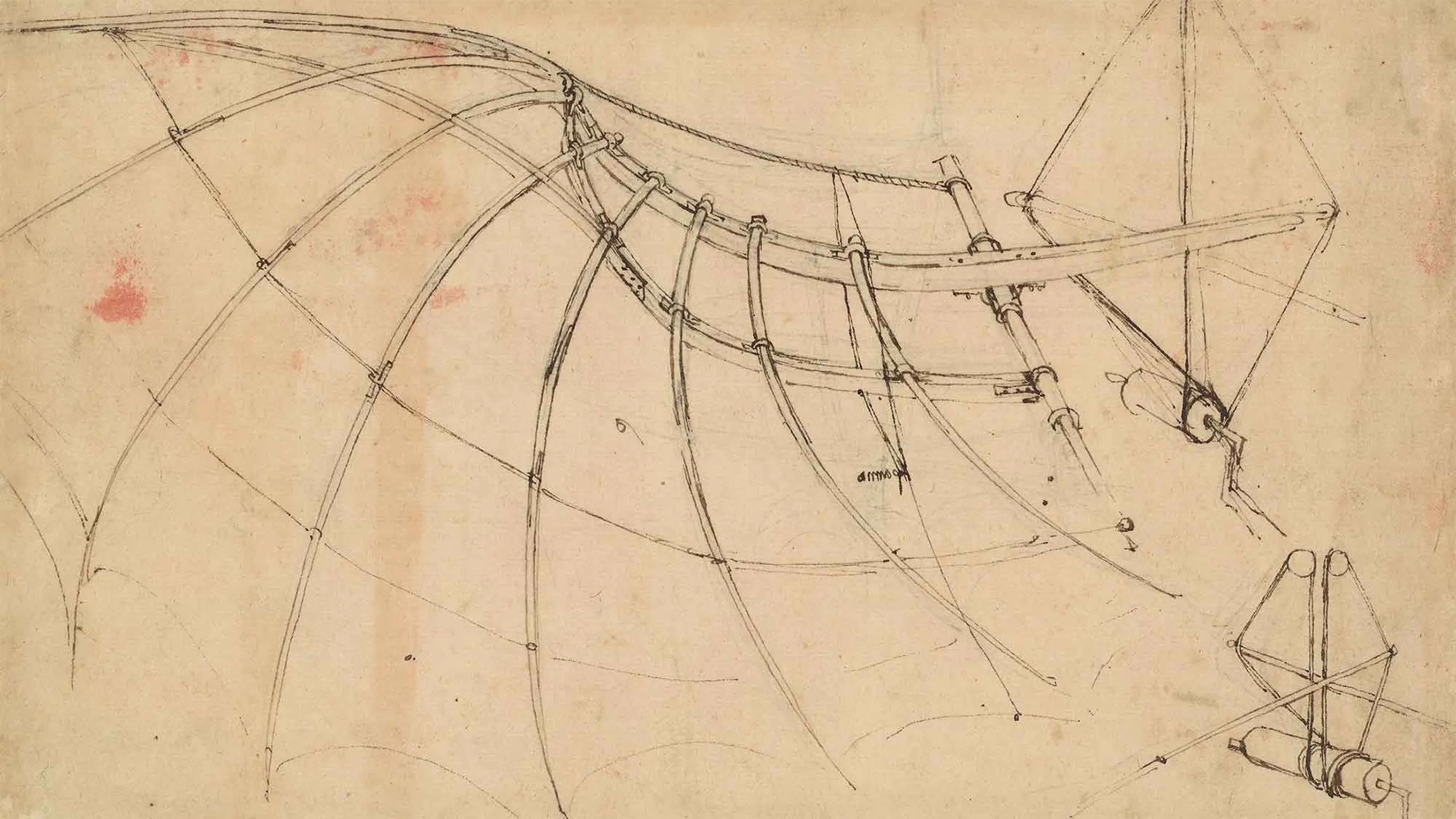
Leonardo da Vinci was never only a painter to me.
I first encountered his works and drawings through my father. At the time, I could not yet say what felt different about da Vinci. I only sensed that I was looking at the work of someone who did not see the world in only one way. It took years for me to understand that the difference lay not only in the range of his work, but also in a mind that placed no fixed boundary between image, thought, making, and understanding.
For da Vinci, painting, the human body, machines, flight, architecture, water, light, and movement were not separate subjects. They were all part of a larger attempt: to understand the world through seeing.
Perhaps this is what keeps him alive.
Not only his paintings. Not only his inventions. Not only the genius later associated with his name.
But his way of looking.
Da Vinci had the kind of mind that observed before answering. Drawing, for him, was not only a way to make an image; it was a way of thinking. When he drew something, he was not merely recording it. He was trying to understand it.
He drew the body to understand its structure. He followed water to understand its movement. He imagined machines to test whether they were possible. He studied flight, not only as a dream, but as a question that had to be seen, analyzed, and imagined again.
Da Vinci’s notebooks may be the clearest image of this mind. The V&A writes that these notebooks include diagrams, drawings, personal notes, and observations: material that offers a rare insight into the way he saw the world. In them, we see more than beautiful drawings. Observation, experiment, idea, question, and image sit beside one another. This coexistence is what matters.
For certain minds, art and science are not two separate paths; they are two ways of approaching the same world.
Da Vinci was a painter, but not only a painter.
The National Gallery describes him as a painter, sculptor, architect, designer, theorist, engineer, and scientist. But the importance of this range is not only in the number of titles. It lies in a mind that could not divide the world into disconnected parts.
He was a designer. An architect. An engineer. An observer. And perhaps above all, someone who turned curiosity into a way of life.
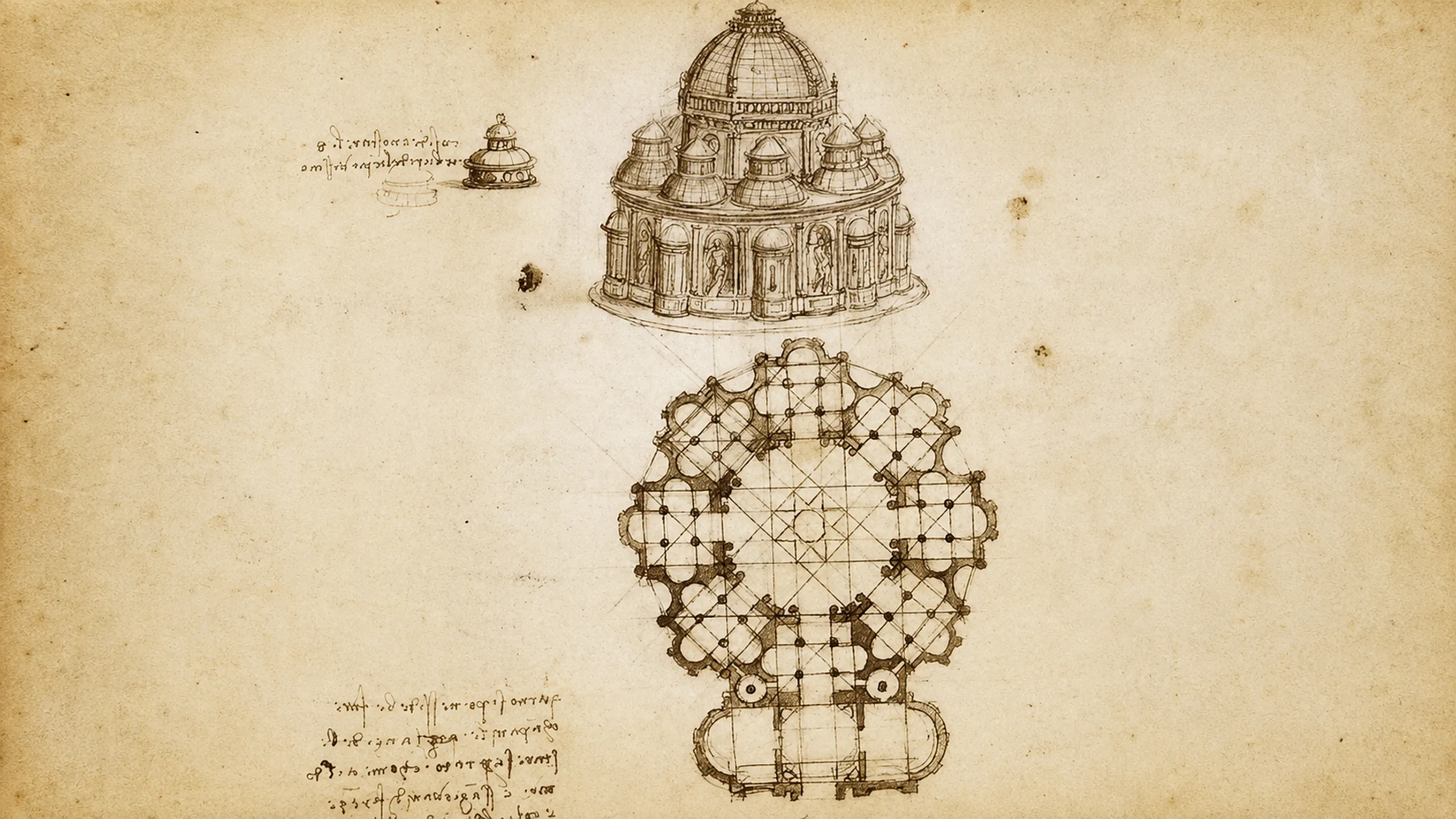
To speak about da Vinci is not only to speak about the past. He still matters today because the world still needs minds that do not turn disciplines into prisons; minds that do not separate art from science, design from making, observation from imagination, or beauty from understanding.
In many accounts, da Vinci is described as an exceptional genius.
But what interests me more than the genius itself is the path behind it: seeing, questioning, recording, experimenting, doubting, and returning again.
This is the more human side of da Vinci.
A mind that does not stop at one answer.
A mind that does not settle a subject with a simple conclusion. A mind that moves from painting to anatomy, from water to machines, from flight to architecture, and from observation to imagination.
Perhaps this is why the unfinished state of some of his works feels like more than a historical imperfection. Sometimes it feels more like a sign of a mind that was always in motion: a mind for which one answer was never enough, and every observation could open a path toward another question.
This is still an important lesson for artists, architects, and designers today.
If seeing remains only on the surface, design also becomes superficial. If knowledge is reduced to information, creation loses its vitality. If disciplines are separated too strictly, the mind loses part of its freedom.
Da Vinci reminds us that creativity is not only the production of a beautiful image.
Creativity can be a way of understanding.
A way of approaching the world. Of seeing relationships. Of asking better questions. Of turning observation into image, image into idea, and idea into possibility.
Perhaps my respect for da Vinci has grown with time. At first, I was drawn to the breadth of his work. But today, after years spent moving between design, making, ideas, and execution, I see something deeper than breadth in him: a way of engaging with the world. A way in which seeing, questioning, drawing, and making are not separate from one another.
The world has changed. Tools have changed. Images are made faster than ever before. But the main question remains the same:
Are we only making images, or are we truly seeing?
For me, da Vinci keeps this question alive.
He reminds me that before creating, one must see; before designing, one must understand; and before dividing the world into disciplines and titles, perhaps we should allow the mind to discover the relationships between things.
Because some minds become smaller when they remain inside a single frame.
Da Vinci was one of those minds.
A mind that refused boundaries.