
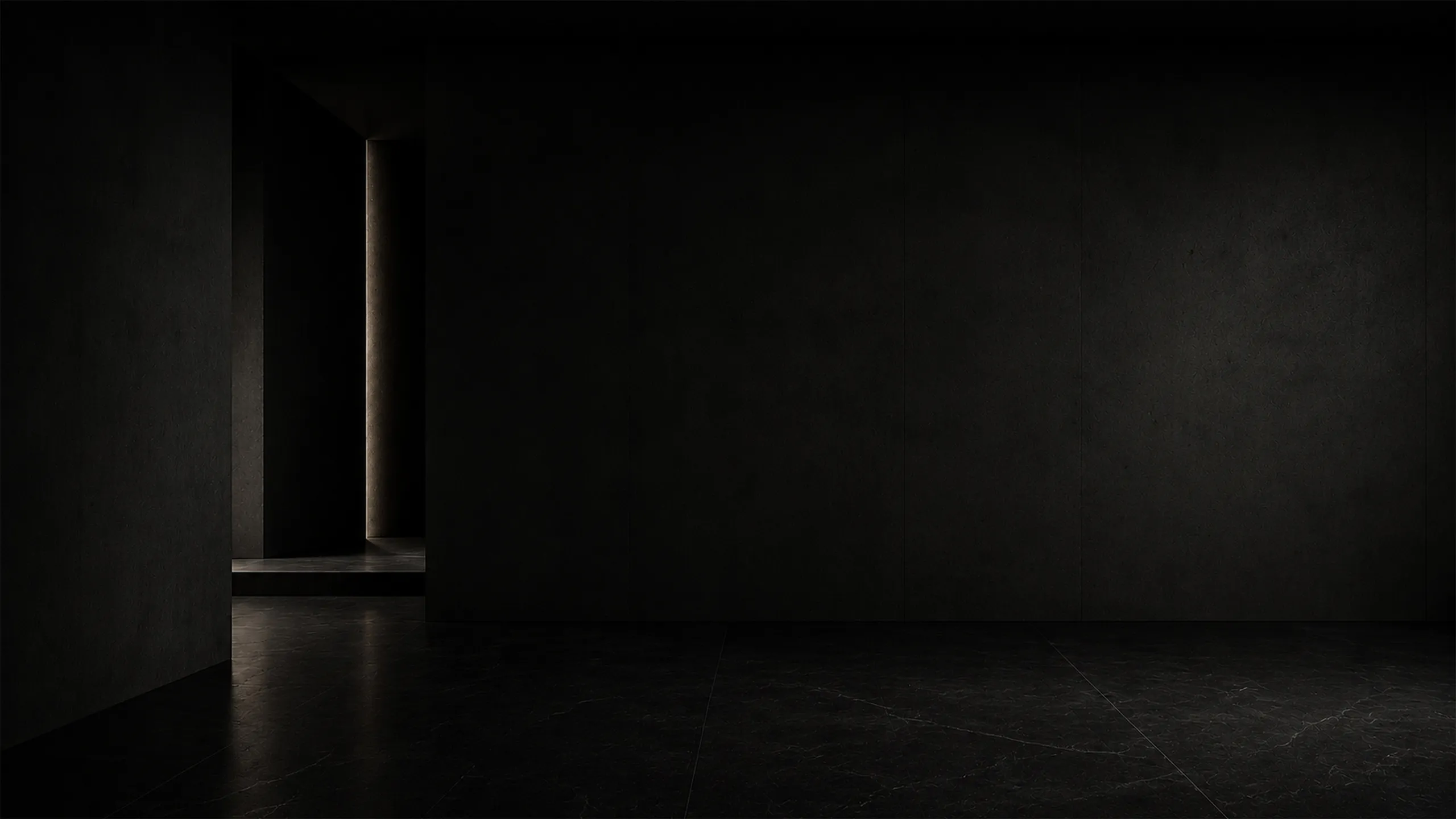
Black is not always used to conceal. Sometimes it clears away the unnecessary. Quiets competing voices. Reduces what is merely visible but adds nothing to the experience.
In a world where everything competes to appear brighter, louder, glossier, and faster, black becomes a form of resistance: not a loud resistance, but a quiet one. It does not explain itself, yet its presence cannot be ignored.
For me, black has never been merely a color. Not simply an aesthetic choice. Not merely a personal preference. Not only a way to create a different kind of space.
Black has weight.
It has dignity.
It has a silence that is not empty.
Perhaps this is why I have always associated black with authenticity. Not authenticity as age. Not as a display of heaviness. Not as a performance of seriousness.
Authenticity means that something need not overstate itself. It can remain quiet and still have presence. It can carry a quality beneath its surface that does not end at first glance.
Black creates this possibility. Against a black ground, nothing can appear without reason. Every line, every light, every color, every texture, every detail must justify its presence. Black exposes excess and quickly strips superficial gestures of their meaning. Whatever remains against it must have the strength to endure.
Perhaps this is why black can also be dangerous. Used only for effect, it becomes a pose. Brought into a space without thought, it can suffocate it. Used without light, texture, scale, and proportion, it produces nothing but darkness.
But when used with precision, black is not the end of seeing. It is the beginning of seeing more carefully.
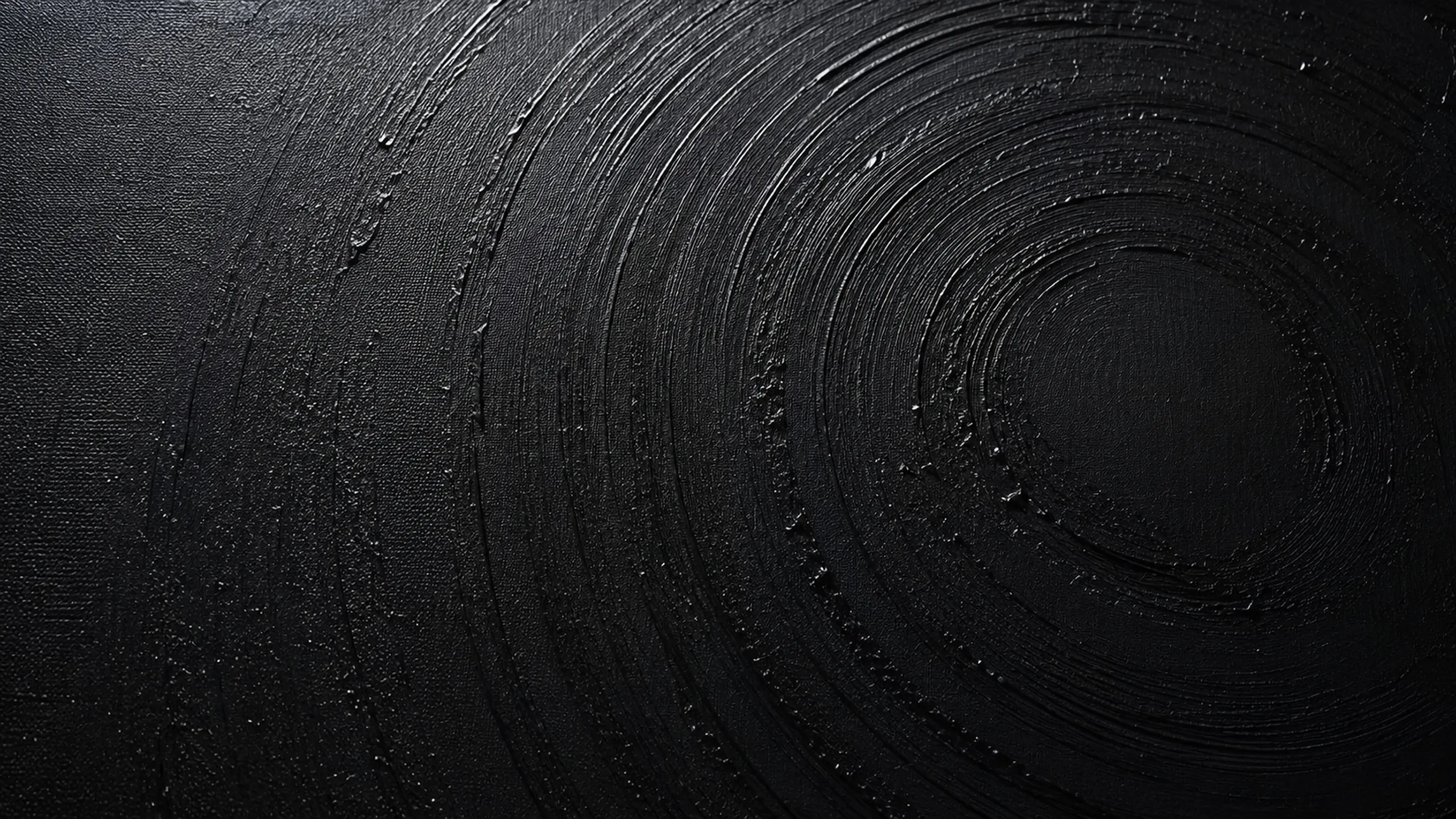
In painting, black can be the place from which the image has not yet emerged. A space before revelation. A place where the eye must linger a little longer to find something.
In architecture, black can do the same. It can free a space from visual noise. It can make light appear more deliberate, give materials greater weight, and allow fewer details to become more precise.
Black is not there to make things dark.
It is there to keep other things from being illuminated without reason.
So light gains value.
So color can reveal itself.
So a surface can gain depth.
So the eye is compelled to move more slowly.
Perhaps this is what I respect about black: it does not impose itself, yet it changes everything. It does not take center stage, yet it holds the space together. It does not shout, yet it has presence.
Black conceals, but not to erase. It conceals so that revelation can carry meaning.
Against black, light is no longer mere brightness. It becomes a decision.
A line of light, a small reflection, a half-visible texture, or a surface slowly emerging from darkness can linger in the mind longer than full illumination, because it asks the eye to see more slowly rather than consume more quickly.
Black is not the absence of light. It is a ground for presence. For focus. For dignity. For seeing things that, in full brightness, might be seen too easily and forgotten just as quickly.
Used well, black takes nothing away. It removes the excess so that what truly needs to remain can be seen more clearly.