
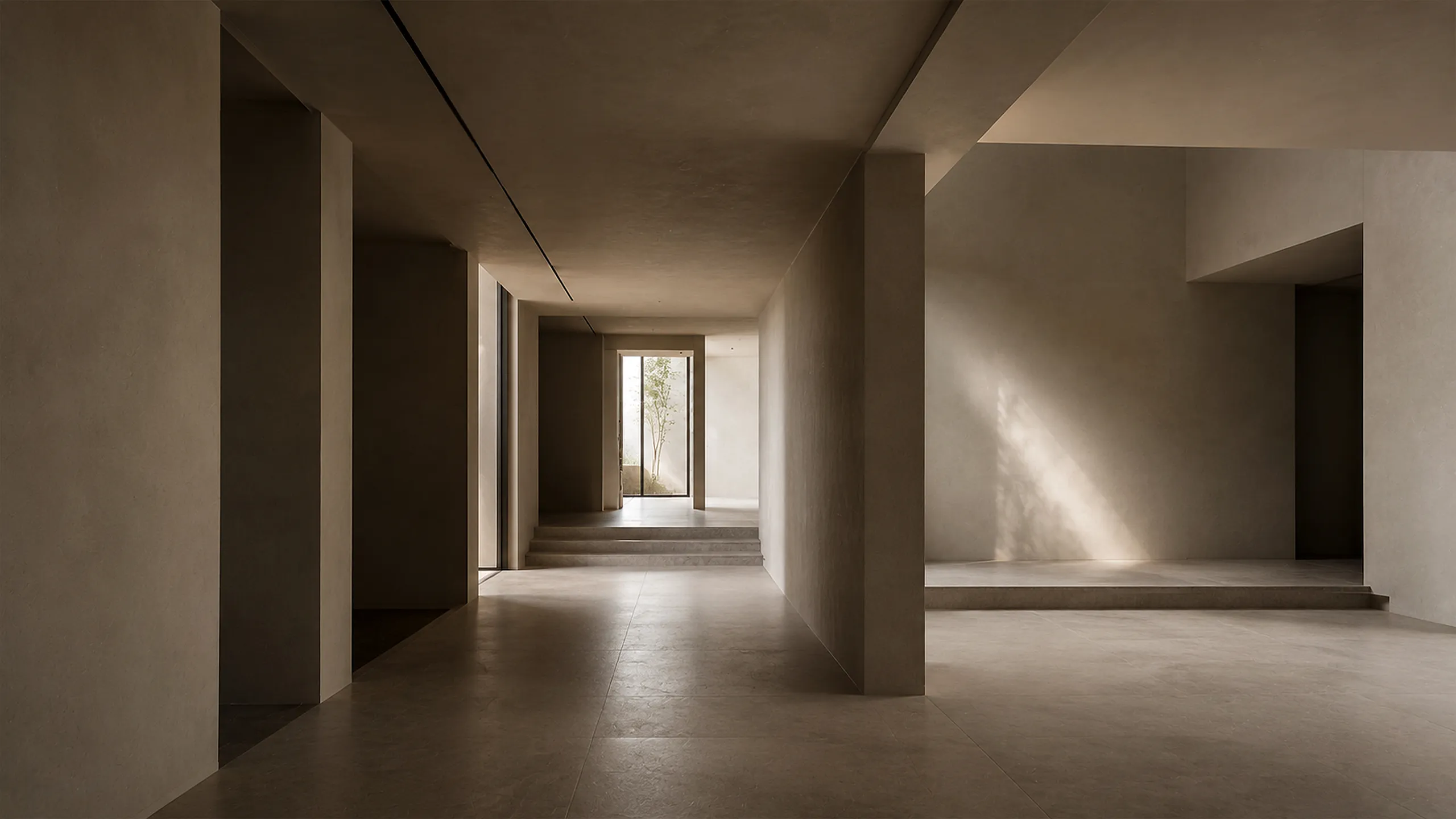
Interior design and decoration are often confused with one another because both ultimately affect the appearance of a space.
But they do not follow the same path.
Decoration usually enters when the space has already taken shape, when it is time to choose colors, furniture, curtains, accessories, final arrangement, or visual details. This part can be important, but it is the last layer of the space.
Interior design begins somewhere else.
Before furniture is chosen. Before color. Before arrangement. Before anything becomes beautiful.
Interior design begins with understanding the space.
Who is this space for? How will it be used? Which part should remain more open? Which part should become more private? How should movement take shape? What kind of relationship should exist between different areas?
This is where space planning becomes important.
Space planning is not simply placing rooms or furniture beside one another. It is about understanding movement, function, access, view, privacy, and the relationship between different parts of a space. Before a space becomes beautiful, it needs to make sense.
A poorly planned space cannot be saved only with beautiful furniture.
If the circulation is wrong, if functions are not placed correctly, if privacy is not properly defined, or if spaces are connected without logic, decoration only sits on top of an unresolved problem.
Decoration can complete the appearance of a space.
But it cannot create the logic of the space.
Good interior design begins by solving the problem, not by decorating it.
In a professional project, the important decisions are made long before colors and furniture are selected. How the entrance is experienced. How movement is defined. Which spaces should be closer to one another. Which areas should remain farther away. What is seen first and what is revealed later. How a person moves, pauses, works, rests, or connects with others within the space.
These decisions may be less visible at first glance, but they shape the real quality of a space.
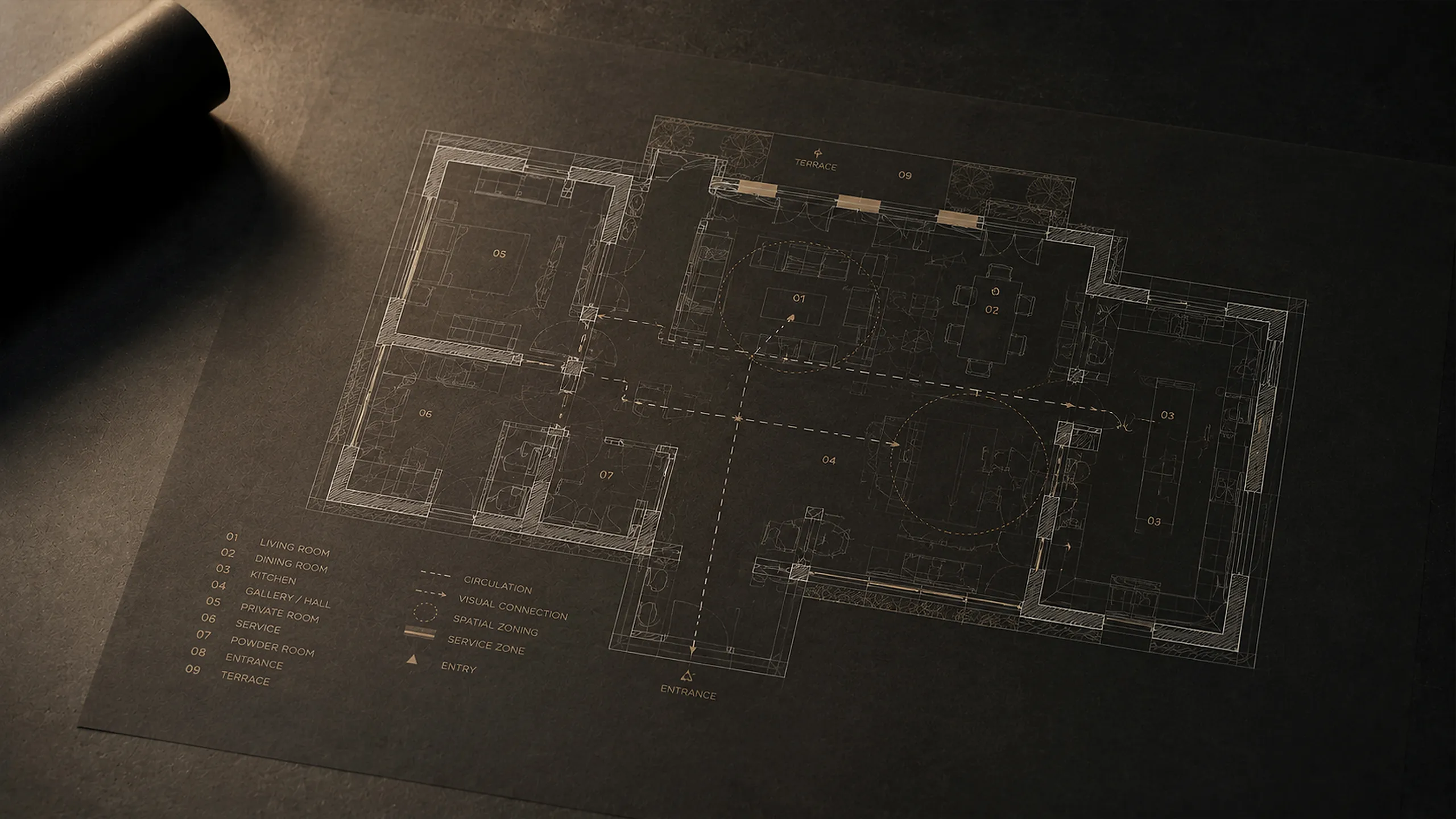
A well-planned layout makes life easier.
A clear path of movement makes a space feel more natural. A thoughtful division makes daily use smoother.
In luxury spaces, this difference becomes even more important because luxury is not created only through expensive materials, special furniture, or many details. If the planning is not right, the best materials and the most refined arrangement cannot hide the main weakness. A space must be precise, comfortable, and usable, not merely visually impressive. This is why interior design should begin within the space: from needs, functions, limitations, and the relationship between its parts.
Only after that do color, furniture, material, light, and details find their proper place.
When this order is reversed, a space may look good in an image, but reveal its weaknesses in everyday use. It may be beautiful, but not comfortable. Well organized, but awkward to use. Expensive in appearance, but without real depth or quality.
Interior design means creating the logic of a space.
Decoration can complete that logic, give it a tone, and make the space warmer, more personal, or more formal. But if the main logic does not exist, decoration becomes only a beautiful layer over an unresolved problem.
A good space is not only decorated.
First, it has been understood. Then organized. Then shaped. And finally completed.
Perhaps the main difference is this:
Decoration gives a space its appearance.
Interior design gives a space purpose.